Have you ever imagined yourself wrapped in a cloth that carries centuries of stories with not just threads or dyes, but traditions, livelihoods, and hope.
In India, handloom is not just a fabric, but it’s a movement woven through history, heartfelt artistry, and economic resilience.
In a country where handlooms can engage millions second only to agriculture where craft still stands as a vital lifeline for weavers, their families, and rural communities. Because from the looms of Banaras to the mud-dyed yards of rural clusters, handlooms offer more than color and texture.
Through this blog, we will explore how handloom connects the past and future, and its rooting in India’s independence movements. So, let’s start reading this beautiful journey to celebrate handloom as it is not just fabric but an enduring movement.
The Backbone of Livelihood
The handloom sector is India’s economic backbone after agriculture as it supports lakh of weavers and allied workers, forming a vital lifeline for families across the countryside.
Through a recent calculator, around 4 million artisans and allied workers from rural lands depend on this craft for their economic well-being. Because this is not just a side business, but a hundred of thousands of households actively engaged in spinning, weaving, and dyeing cloth which carries tradition as well as hope for tomorrow.
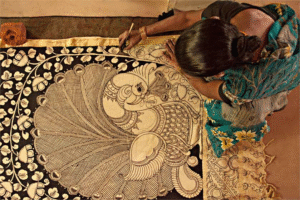
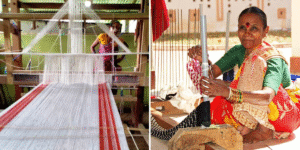
As we take a closer look in the above image, we can see that most looms are moved by women’s hands. Around 73% of women weavers in India are clustered in regions like Telangana and Andhra Pradesh. Their work creates more than cloth because it builds resilience. This project across India multiplies these powers as in Kota, where Kota Women Weavers Organization helps hundreds of women by integrating training, design innovation, and access to markets which can So, when you support this sector of handloom, it means you are investing in livelihood means – real, generational livelihoods and drive economic empowerment, specifically for women of our country.
Heritage Connection with every Thread
When we are opting for handlooms, it means we are connecting with something deeper than textiles because we wear history, community and heritage. In the current situation of following rapid trends, handloom reminds us that elegance lies in humanity, artistry, and cultural heritage.
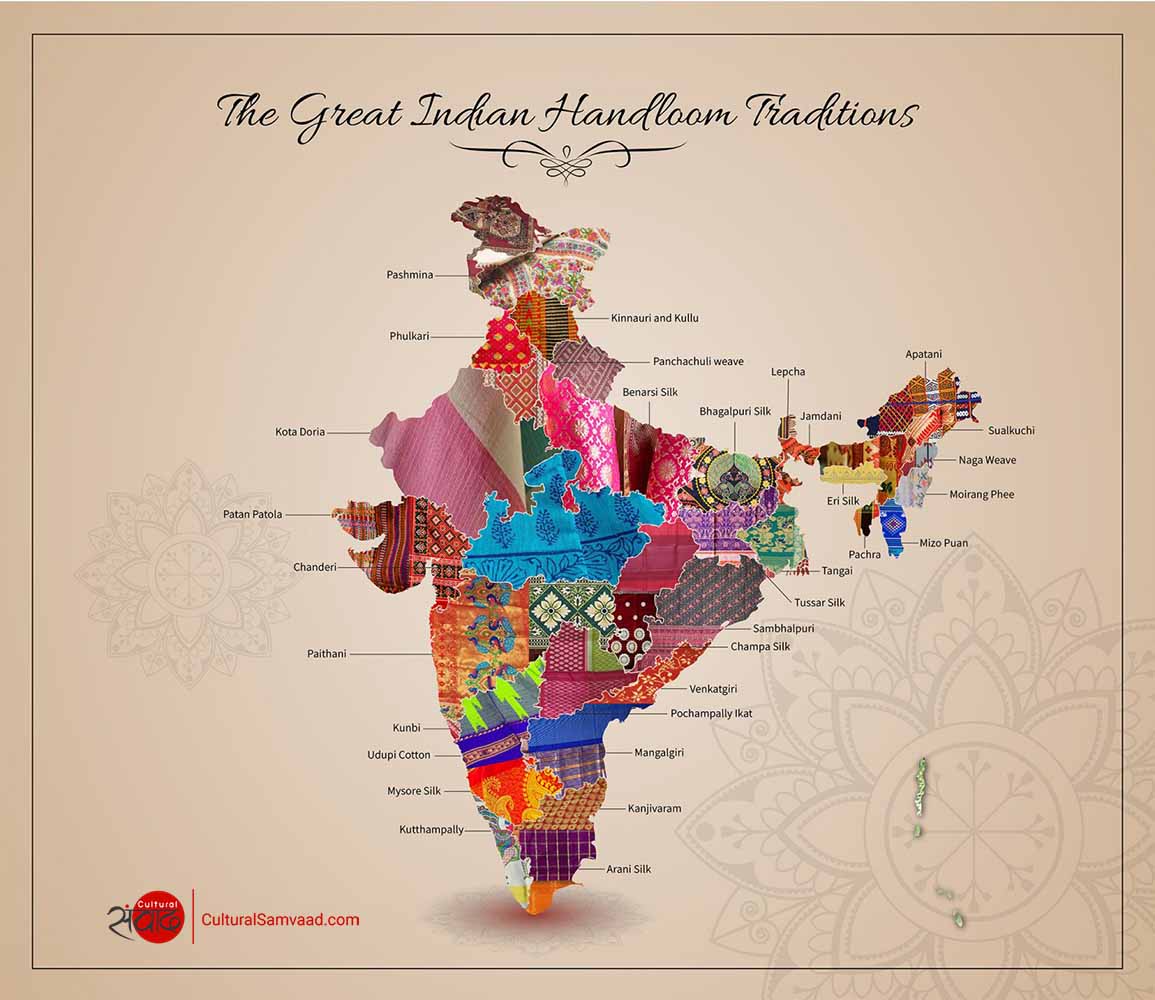
Every region of India’s motifs, weave patterns, and choices of dyes are rooted with regional geography, climate and symbolism stories to preserve local identities and encourage creativity that can be nurtured and transferred through generations.
These textiles surpass simple function as they preserve regional identities and encourage creativity that has been cultivated and handed down through generation to generation.
The Handloom Revolution from Loom to Liberty
In the time of the early 20th century in India, where every revolution has its story. Around 1905, The Swadeshi Movement, railed Indians to reject British made goods and revive local crafts through Khadi, which was spun and handwoven cloth from the heart of the fight for economic self-sufficiency and cultural pride.
Mahatma Gandhi uplifted Khadi beyond simple fabric calling it as the soul of Swaraj (self-rule). Each spinning on the Charkha, connecting personal labor with national liberation, because Khadi became a medium to unite people across all classes and regions in a collective set of dignity and independence.
Handloom during Swadeshi movements was not just about resisting British goods, but it shows a symbol of an ecosystem where communities came together because every handloom saree, dhoti, and stole woven was not just a fashion of choice. It was a political statement which declares unity and economic independence.
Wearing a handloom today means honoring that history which is more than just a sustainable fashion. It is a reminder to keep this in mind that the journey of India’s freedom was not only fought on fields but also spun silently on looms in small homes across the country.
Handloom in the Modern Era
Handloom is back in the national spotlight with the help of the Government of India.
Since 2015, National Handloom Day has been celebrated on 7th August to honour Swadeshi Movement and recognise cultural and economical contributions of the weavers. This year (2025) celebration at Bharat Mandapam featured some awards as the Sant Kabir and National Handloom to honour excellence.
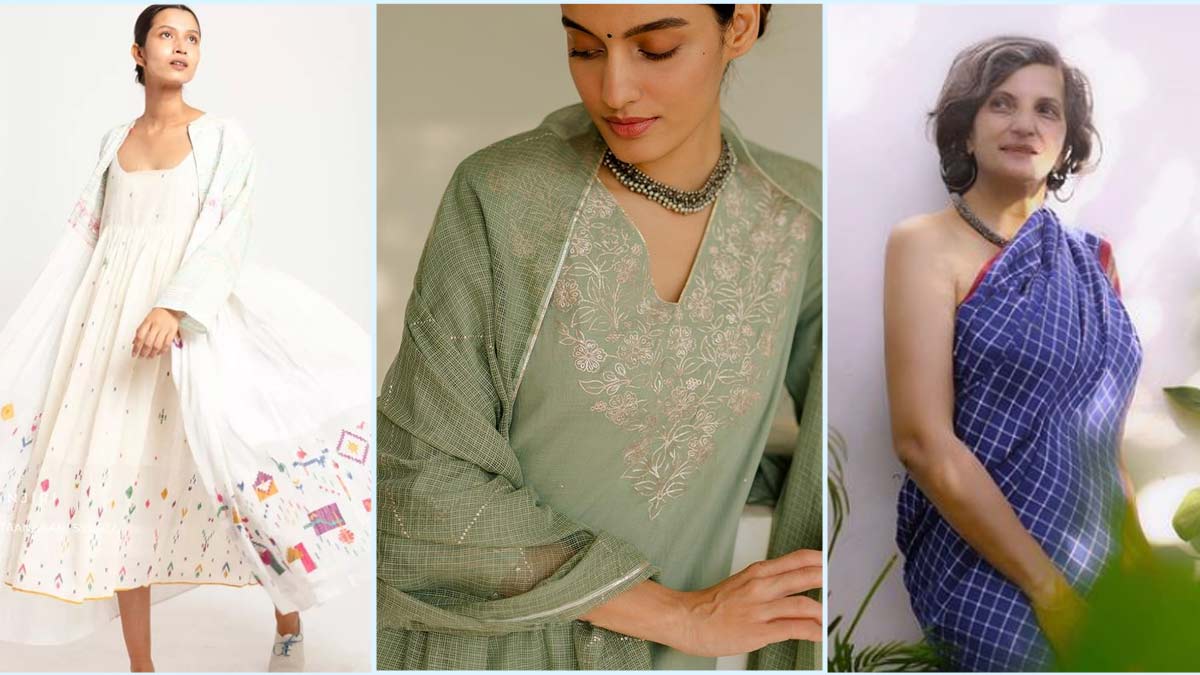
Today, handloom stands at the intersection of tradition and innovation. Through designers handwoven textures and initiatives from the government for relevance, handloom weaves a combination of narrative of cultural pride, sustainability, and modern elegance.
Because it’s not just a fabric, but it’s a living, evolving craft from centuries and sustained through intention.
Conclusion
In today’s time, handloom is more than just a fabric, because it’s a powerful statement of activism, heritage, ecology, and elegance. Each piece of woven uses natural fibers and energy efficient techniques to promote low carbon, and sustainable alternatives to mass production textiles.
Handloom fabrics connect us to our roots and the artisans that keep this tradition from centuries. As per my thoughts as a writer, choosing a handloom is investing in meaningful art work because choosing it today will decide the shape of tomorrow’s stories.
Lets make a promise that may we all weave a future where fashion doesn’t just follow trends but also tells a story of care, culture, and a connection.
Threads of thought by
Prachi Sinha, August 2025
Reference
Anand, Ashima, and Seema Sekhri. 2022. “Indian Handlooms: Present Scenario and Future Directions.” IIS Univ.J.A 10 (3): 339–57.
Waves Institute of Fashion Designing. 2018. “The Great Indian Story of Handlooms – Crafting Culture through Threads.” Fashion Articles by Waves Institute of Fashion Designing. 2018.